From a small beach bonfire with 20 friends to a massive desert city of over 70,000, Burning Man has become the ultimate celebration of art, community, and radical self-expression.
1986 — The Beginning (Baker Beach, San Francisco)
Larry Harvey and Jerry James built an 8-foot wooden man and burned it on June 22, 1986, surrounded by about 20 friends. It was spontaneous — no plan, no permits — just art, fire, and community. People on the beach joined in, played music, and celebrated freedom of expression.
1987–1989 — Growing on the Beach
Each summer, the event grew. By 1989, the wooden Man was 40 feet tall, and hundreds of people gathered. But after that year, authorities banned burning large structures on the beach — it had simply become too big.
1990 — The Move to Black Rock Desert (Nevada)
A group of artists and adventurers from the Cacophony Society invited Larry to bring the burn to the Black Rock Desert, a vast dry lakebed in Nevada. That year, about 80 people went — no rules, no roads, just art, dust, and total freedom. This was the birth of the desert version of Burning Man.
1990s — The Birth of Black Rock City
The desert became a blank canvas for creativity. Artists started building large installations, theme camps, and mutant vehicles. The event developed its core principles: radical self-expression, self-reliance, community, and leave no trace. By 1998, it drew 15,000 people.
2000s — From Gathering to Temporary City
Burning Man became a fully functioning city, designed in a circular layout called Black Rock City. It had roads, camps, services, and even its own “Department of Public Works.” Population soared to 35,000+ by mid-2000s. Art cars, sound camps, and giant interactive sculptures defined the experience.
2010s — Today — Global Movement
Now, over 70,000 people attend annually. The Man still burns each year, but the spirit spread worldwide — with regional “Burns” on every continent. Burning Man became less of a festival and more of a cultural experiment in creativity, sustainability, and human connection.
Burning Man Today – Fun Facts
Population: Over 70,000 people gather each year – a fully functional temporary city rises in the desert.
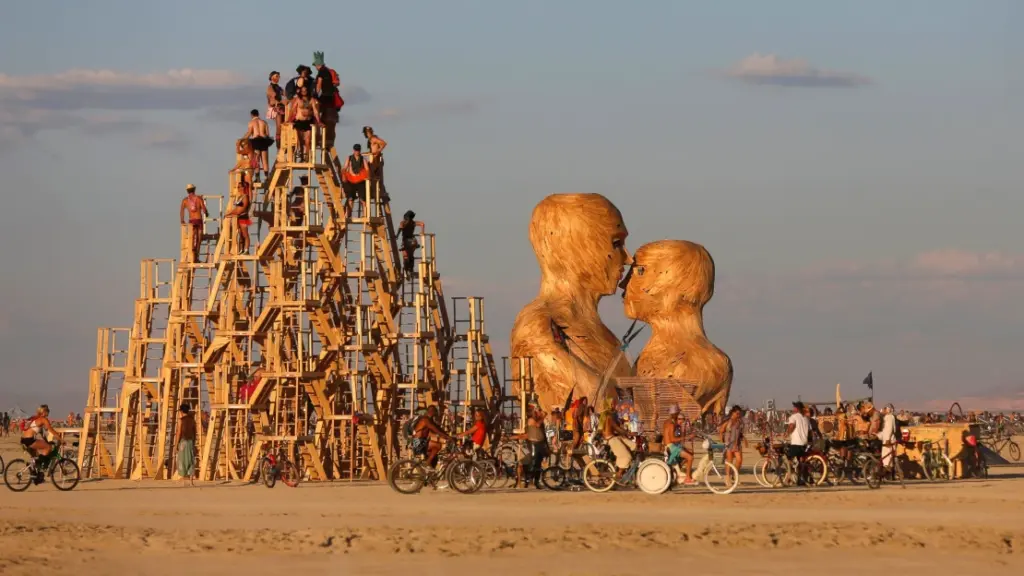
Art Everywhere: There are hundreds of massive art installations, some you can walk through, climb, or even ride! Many are interactive.
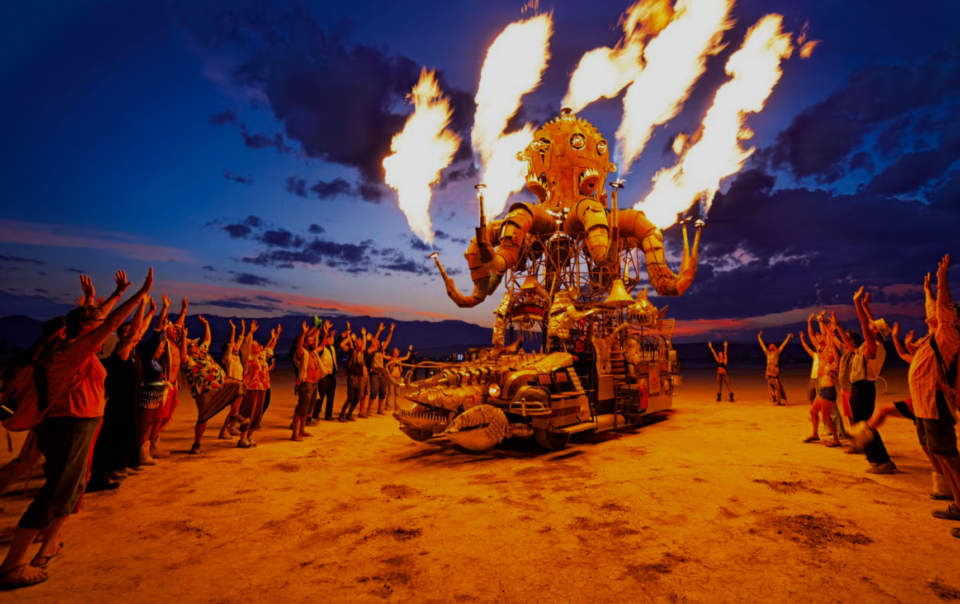
Mutant Vehicles: Cars aren’t just cars here — people decorate them as dragons, giant animals, or even mobile art galleries.
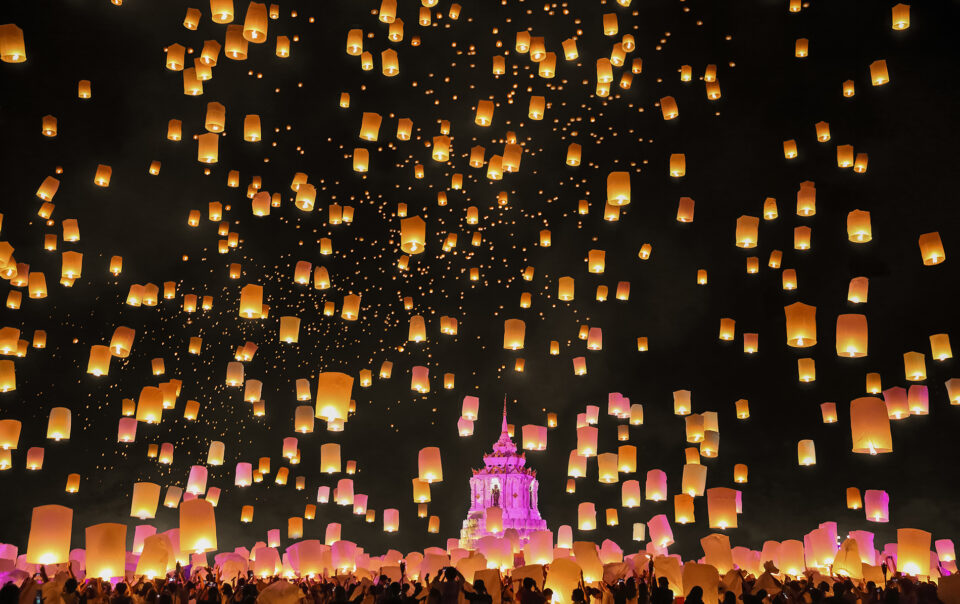
Every November, the skies of northern Thailand come alive with light and hope. In 2025, the Chiang Mai CAD Khomloy Sky Lantern Festival once again transforms the night into a breathtaking sea of glowing wishes.
Held on November 5–6, 2025, at the CAD Cultural Center Lanna in Mae On District, about 30 km east of Chiang Mai, the festival is part of Thailand’s ancient Yi Peng and Loy Krathong traditions — celebrations of light, renewal, and gratitude.
Over 15,000 people gather beneath the stars, each releasing a paper lantern (khom loy) into the sky, carrying personal wishes for love, peace, and good fortune. Guests also float krathongs (decorative baskets) on nearby waters, letting go of worries and welcoming new beginnings.
Beyond the lantern release, visitors enjoy Lanna-style music, traditional dance, and hill-tribe performances, along with authentic Thai cuisine and eco-friendly lanterns made from biodegradable materials.
For two magical nights, the sky over Chiang Mai becomes a living artwork — a reflection of unity, peace, and dreams taking flight.
May every wish rise high and illuminate our world with hope.